
In modern industrial environments, the reliability and safety of machinery depend heavily on precise control systems. Relays, as essential switching devices, play a pivotal role in ensuring smooth operations. Understanding and mastering different relay types is crucial for engineers and technicians seeking efficient and secure machinery performance.
Understanding the Role of Relays in Industrial Systems
Relays act as electrically operated switches that control circuits without direct human intervention. By isolating control circuits from high-power loads, relays enhance safety while maintaining operational efficiency. Mastery of relay types allows engineers to design systems that are not only accurate but also resilient to faults. Learning relay types enhances troubleshooting efficiency.
- Isolation and Protection: Relays protect sensitive components from high voltages or currents.
- Automation Enablement: They form the backbone of automated operations, reducing manual intervention.
- Load Management: Relays help in distributing and managing electrical loads efficiently.
Key Relay Types and Their Applications
Industrial systems employ a variety of relays, each suited for specific operational needs. Recognizing their characteristics ensures optimal selection and application.
- Electromechanical Relays (EMR):
- Operate with physical contacts, providing reliable switching for many standard applications.
- Ideal for environments where mechanical feedback is useful for monitoring.
- Solid State Relays (SSR):
- Utilize semiconductor components for silent, fast, and long-lasting switching.
- Perfect for high-speed machinery operations requiring minimal wear and tear.
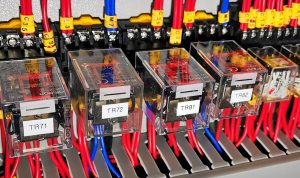
- Time-Delay Relays:
- Introduce precise time intervals before activating or deactivating circuits.
- Essential for sequential machinery operations and preventing equipment stress.
- Overload and Thermal Relays:
- Protect motors and circuits from overheating or excess current.
- Vital for maintaining safety and preventing costly equipment damage.
Benefits of Relay Mastery for Machinery Operation
Proficient understanding of relay types directly influences machinery safety, accuracy, and efficiency.
- Enhanced Safety: Correct relay selection prevents circuit overloads and potential hazards.
- Operational Accuracy: Tailored relay use ensures precise timing and sequence control.
- Maintenance Efficiency: Knowledgeable relay implementation reduces downtime and troubleshooting complexity.
- Energy Optimization: Efficient switching minimizes power wastage and extends component lifespan.
Best Practices for Implementing Relays
Adopting best practices in relay usage reinforces safe and accurate machinery operation.
- Ensure proper voltage and current ratings match the application requirements.
- Maintain clean and secure wiring connections to prevent malfunctions.
- Regularly inspect relays for wear, corrosion, or signs of stress.
- Document relay types and their designated functions for easier maintenance and training.
Conclusion
Mastering relay types is more than a technical skill; it is a proactive approach to enhancing the safety, reliability, and performance of industrial machinery. Engineers and technicians who invest time in understanding the nuances of electromechanical, solid-state, and specialized relays contribute to smoother operations, reduced downtime, and a safer workplace. By leveraging the right relay for each application, industries can achieve optimized performance and sustainable operational excellence.